The Public Health Approach to Suicide Prevention
One of the most important frameworks for understanding community-based suicide prevention is the public health approach. Rather than focusing exclusively on individuals who are already in crisis, the public health approach addresses suicide risk at three levels: universal prevention for the whole population, targeted support for groups at higher risk, and indicated intervention for individuals already showing warning signs.
Risk and Protective Factors Across Populations
Understanding what increases or decreases suicide risk across different populations is foundational to prevention planning. Risk factors include things like social isolation, access to lethal means, history of trauma or abuse, substance use, and lack of access to mental health care. Protective factors include strong social connections, access to care, feelings of belonging, and community support.
These factors do not affect all populations equally. Age, gender, race, geography, and socioeconomic status all influence how suicide risk presents and what protective factors are most effective. Community-based prevention strategies that account for these differences are more likely to reach the people who need them most.
Cross-Sector Partnerships and Evidence-Based Planning
Effective community-based suicide prevention requires collaboration across sectors. Healthcare, education, social services, law enforcement, faith communities, and peer support networks all have a role to play. When these sectors share data, align their efforts, and build prevention plans grounded in evidence, the result is a community-wide response that is stronger than any single sector could build on its own.
Key Strategies That Reduce Suicide Risk in Communities

Some of the most effective tools for reducing suicide risk in communities are not clinical interventions at all. They are upstream strategies that address risk before a crisis develops.
Upstream Prevention
Upstream prevention focuses on the conditions that create or reduce suicide risk long before someone reaches a point of crisis. That includes efforts to reduce social isolation, increase access to mental health resources, address trauma and adverse childhood experiences, and build community environments where people feel connected and valued. Healthcare providers contribute to upstream prevention through the way they engage with patients, the questions they ask, and the referrals they make to community resources.
Lethal Means Safety
Lethal means safety is one of the most evidence-based strategies for reducing suicide deaths. Reducing access to highly lethal methods during periods of crisis can save lives. This is an area where healthcare providers play a direct role, through conversations with patients and families about safe storage of medications and firearms, particularly for households where someone is at elevated suicide risk.
Promoting Connectedness and Access to Care
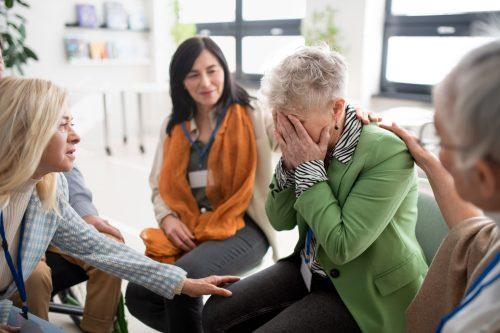
Social connection is one of the most powerful protective factors against suicide risk. Community-based strategies that promote connectedness, through peer support programs, community mental health initiatives, and outreach to isolated individuals, directly address one of the most significant drivers of risk. Improving access to care, particularly in underserved communities, is equally critical. When people can get help when they need it, outcomes improve.
What AMC’s Course Covers
AMC’s Community-Based Approaches to Suicide Risk course is designed for both healthcare and community professionals. It covers the full range of strategies needed to build effective, evidence-based community prevention efforts.
The course teaches providers how to:
- Explain the public health approach to suicide prevention and the role of community-based strategies
- Identify risk and protective factors that influence suicide risk across different populations
- Describe the importance of cross-sector partnerships, data collection, and evidence-based prevention planning
- Recognize the purpose of lethal means safety, upstream prevention, and postvention support in reducing suicide risk
- Apply strategies for improving access to care, promoting connectedness, and supporting individuals with lived experience
The course runs one hour, awards 1.0 CME credit, and provides a certificate of completion upon finishing. It is fully online and self-paced. The course carries approval from the California Board of Registered Nursing, Provider #18138, for 1.5 Contact Hours.
Every Community Has a Role to Play
Suicide prevention is not the responsibility of any single profession or system. It is a shared responsibility that requires healthcare providers, community organizations, policymakers, and individuals to work together toward a common goal.
By investing in training that builds community-based prevention skills, your organization can ensure clinical readiness, strengthen community partnerships, and contribute to a coordinated response that reaches people at every level of suicide risk.
Enroll your team in our customized, free course development program today and give your organization the tools it needs to address suicide risk not just in the clinic but across the communities you serve.
Because preventing suicide takes more than a clinical encounter. It takes a community.