Why Infection Control Is a Legal Issue, Not Just a Clinical One
Veterinary professionals often frame infection control as a best practice or a clinical standard. But in the eyes of the law, it is much more than that. Federal and state regulations govern how animal care facilities handle infectious disease, manage waste, protect staff from exposure, and communicate risks to pet owners. When facilities ignore these standards, they face significant legal exposure. Regulators can impose enforcement actions, and clinics can incur substantial financial liability.
The Occupational Safety and Health Administration (OSHA) requires that employers, including veterinary practices, protect workers from exposure to bloodborne pathogens and other infectious materials. Failure to meet these requirements is not just a compliance issue. It can result in substantial penalties, with OSHA fines reaching up to $16,131 per violation for serious offenses and as much as $161,323 per violation for willful or repeated violations. The Centers for Disease Control and Prevention (CDC) issues guidelines on zoonotic diseases, which are illnesses that can pass between animals and humans, further reinforcing the expectation that clinics actively reduce transmission risks. State veterinary boards set their own standards, and violations can trigger disciplinary proceedings, including license suspension or revocation. In short, poor infection control is not just a medical failure. It is a legal liability.
The Most Common Legal Vulnerabilities in Veterinary Clinics
Most legal problems related to veterinary infection do not come from deliberate neglect. They come from gaps in training, inconsistent protocols, poor documentation, and the assumption that staff follow procedures correctly, even when no one actually checks. Here are the areas where clinics are most exposed.
Inadequate staff training
If a staff member contracts a zoonotic illness or an owner claims exposure, regulators and attorneys ask one question: What training did your staff receive? If the answer is vague, undocumented, or nonexistent, that becomes a serious liability. Veterinary infection prevention is not something employees can learn on the job through observation alone.
Missing or incomplete documentation
Proper recordkeeping is one of the clearest indicators of a well-run practice. When staff fail to maintain infection control logs, cleaning records, and incident reports, regulators view those gaps as signs of noncompliance. In legal proceedings, attorneys often use these documentation gaps to argue negligence, even when they struggle to prove actual harm.
Failure to isolate sick animals
One of the most basic principles of veterinary infection control is separating animals with known or suspected infectious conditions from healthy patients. When this step is skipped, whether due to limited space, time pressure, or simply not having a clear protocol in place, the risk of cross-contamination rises dramatically. If another animal becomes ill after being housed near an infectious patient, the clinic can face civil liability from the pet owner.
Personal protective equipment (PPE) non-compliance
OSHA requirements around PPE are not optional. If staff are not consistently using gloves, masks, gowns, and other protective equipment when handling potentially infectious animals, the practice is not only putting employees at risk. It is also inviting regulatory scrutiny and potential fines.
When Pet Owners Sue: What the Cases Look Like
Civil lawsuits related to veterinary infection are more common than many clinic owners realize. Pet owners who believe their animal contracted an illness, worsened due to an infection, or was exposed to a disease while under veterinary care have pursued legal action successfully in multiple states. These cases typically hinge on three things: whether a standard of care existed, whether the clinic followed it, and whether the failure to follow it caused harm.
In many cases, clinics that had written infection control policies but failed to enforce them or train their staff consistently were found liable precisely because the standard existed on paper but not in practice. A policy that lives in a binder on a shelf and is never implemented offers almost no legal protection. Courts and regulators are looking for evidence that the policy was actually followed, which means training records, cleaning logs, and incident documentation all matter enormously.
Zoonotic Diseases and the Added Layer of Public Health Risk
Zoonotic risk sets veterinary infection control apart from many clinical settings. It refers to the spread of disease from animals to people who work in or visit the clinic. Diseases such as ringworm, salmonella, leptospirosis, and MRSA can spread in these environments. Pet owners, children, and immunocompromised individuals face a higher risk.
When a human becomes ill after visiting or working in a veterinary clinic, the legal exposure expands significantly. It is no longer just about animal welfare. It becomes a public health matter, and in some states, it triggers mandatory reporting obligations. Clinics that fail to show a functioning veterinary infection prevention program face substantial legal and reputational risk.
What a Legally Sound Infection Control Program Actually Looks Like
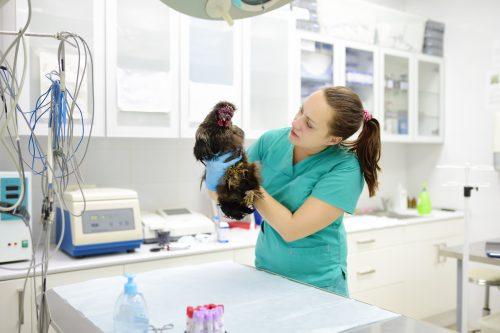
Protecting your clinic legally does not require an overwhelming overhaul. It requires consistent, documented, and well-trained execution of the basics. A defensible veterinary infection control program requires a written policy with regular review and updates. It also requires staff training with records on file, a clear isolation protocol for sick or potentially infectious animals, and cleaning and disinfection logs for each shift. The program must include PPE availability, compliance monitoring, and a documented process for handling and reporting infectious disease incidents.
The goal is not perfection. Infections can and do occur even in the best-run facilities. Your goal is to show that your team completed training, followed protocols, and responded appropriately when something went wrong. You must also document each step. That documentation is what separates a defensible situation from a liability nightmare.
The Cost of Getting It Wrong
A single veterinary infection incident can trigger regulatory action, a lawsuit, or a public health investigation. It can cost a clinic tens of thousands of dollars in legal fees, fines, and lost business. It can also damage a hard-earned reputation in the community. For small and independent practices, that kind of hit can be existential.
The investment required to build a strong infection control program is a fraction of that cost. It protects the clinic legally. It also protects the animals in your care, the staff who show up every day, and the pet owners who trust you.
Infection control is not a background task. In veterinary settings, it is one of the most legally consequential things your team does every single day. Treat it that way.
Ready to protect your clinic and your team?
American Medical Compliance offers training programs designed to help veterinary and healthcare teams build consistent, defensible infection control practices. You can even enroll your entire team in a customized, free course development program tailored to your organization’s specific needs.