The Professional Greeting Sets the Tone for Everything That Follows

First Impressions Happen in the First Five Seconds
The way a call is answered communicates a great deal about a practice in a very short window of time. A warm, clear, professional greeting signals to the caller that they have reached a team that is organized, attentive, and ready to help. A rushed, distracted, or inconsistent greeting sends the opposite message.
What a Professional Greeting Actually Involves
A professional greeting is not just about saying the right words. It is about tone, pacing, and genuine attentiveness. Saying the practice name clearly, introducing yourself, and inviting the caller to share their reason for calling are all part of a greeting that puts the patient at ease from the very first moment.
Phone skills at this level may seem basic. But consistency is where most teams fall short. When every team member answers calls the same way, the practice communicates professionalism as a standard rather than an accident.
Identifying Caller Needs Before Taking Action
One of the most common mistakes in healthcare phone calls is rushing to solve a problem before fully understanding what the caller actually needs. A patient who calls about a billing concern may actually be asking whether their insurance covers a specific procedure. A caller who sounds angry may be confused rather than upset.
Strong phone skills include the ability to listen actively, ask clarifying questions, and confirm understanding before taking any action. That process takes an extra thirty seconds at most. But it prevents the far longer and more costly problem of handling a call incorrectly and having the patient call back, more frustrated than before.
This course teaches dental healthcare staff how to identify caller needs before acting, creating a more efficient, patient-centered phone experience from the very first exchange.
Guiding Upset or Confused Callers Toward Clear Next Steps
Not every call is straightforward. Callers may be upset. Others are confused and do not know what they need. Some are in pain and looking for guidance. These are the calls that put a team’s phone skills to the real test.
Staying Calm and Solution-Focused
When a caller is emotionally elevated, the instinct for many staff members is to match their energy or shut down entirely. Neither response serves the patient or the practice. Effective phone skills involve staying calm, acknowledging the caller’s concern without escalating it, and guiding the conversation toward a concrete next step.
That next step might be scheduling an appointment, transferring the call to a clinical team member, or simply giving the caller clear information about what will happen next. The goal is always to leave the caller with a sense of direction rather than frustration.
Knowing When to Route the Call
Not every concern can or should be handled by whoever picks up the phone first. Part of strong phone skills is knowing the boundaries of what a role allows, when a concern needs to go to a clinical team member, a supervisor, or another department, and how to make that transfer in a way that does not leave the caller feeling passed off or ignored.
What AMC’s Course Covers
AMC’s Professional Phone Etiquette and Customer Service course is a 45-minute course designed specifically for dental healthcare providers. It focuses on the practical phone skills that translate directly into better patient interactions and stronger compliance.
The course teaches staff how to:
- Answer calls with a professional greeting and respectful tone
- Identify caller needs before taking any action
- Guide upset or confused callers toward clear and helpful next steps
- Protect patient information and route concerns to the appropriate team member
Upon completion, each participant receives a certificate of completion and earns 0.75 CEU credits. The course is fully online and self-paced, making it easy to fit around the demands of a busy dental schedule.
Strong Phone Skills Protect the Practice and the Patient
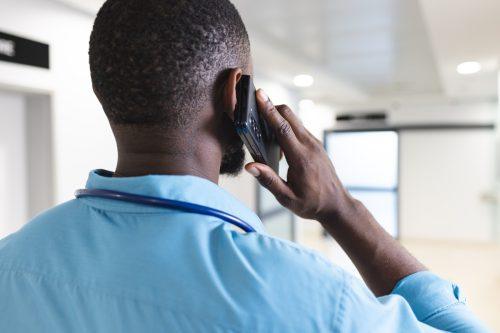
Every call is a chance to strengthen patient trust or lose it. Every interaction is an opportunity to demonstrate that the practice is organized, caring, and professional from the very first point of contact.
By investing in structured phone skills training, your organization can ensure compliance, boost operational efficiency, and foster greater trust among both patients and staff.
Enroll your team in our customized, free course development program today and give your dental practice the tools it needs to handle every call with the confidence, clarity, and professionalism that patients deserve.
Because in healthcare, every call is a patient care moment. And patient care moments deserve the best your team has to offer.